
Handle disputes
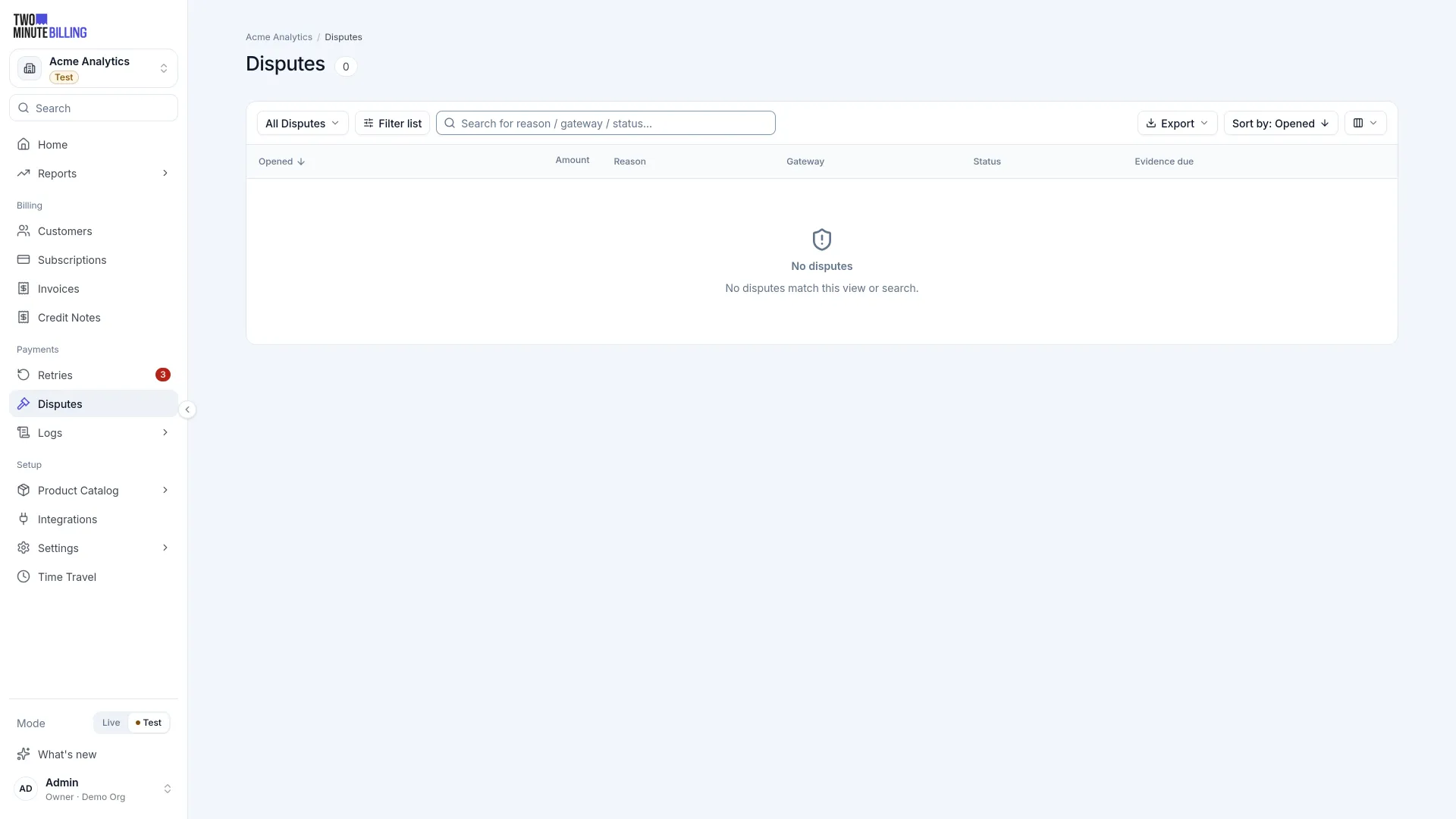
A dispute — a chargeback — is your customer's bank reversing a payment on their behalf. Open Disputes in the business.
What you see
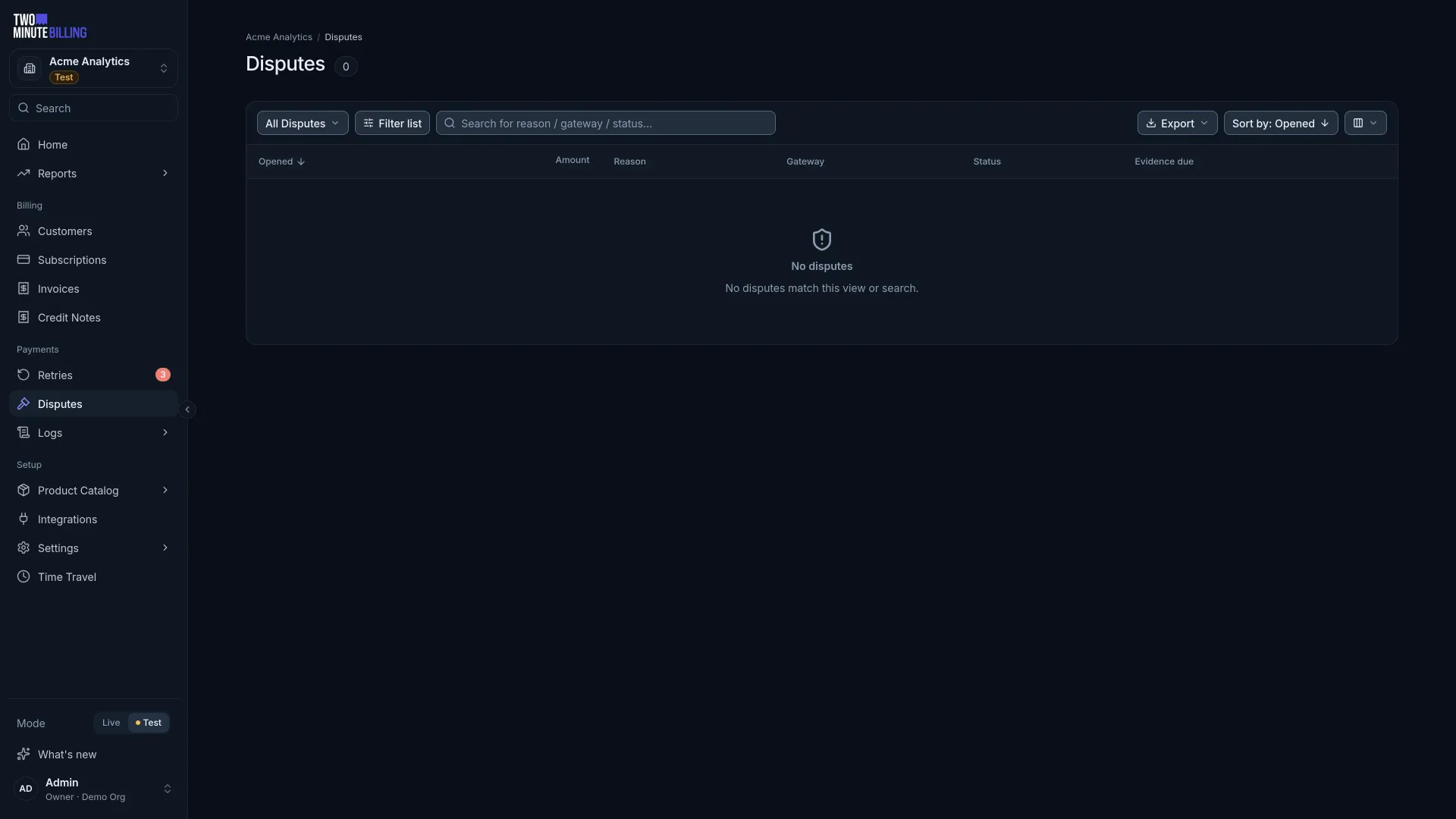
Each dispute shows the payment it relates to, the amount, the reason the bank gave, and where it is in its lifecycle. From there you can reach the customer, the invoice and the original transaction.
What happens to your records
The money has left, so Two Minute Billing reflects that rather than pretending the invoice is still settled. The trail stays intact: the original payment, the dispute and the outcome are all on the record, which is what you need when you reconcile.
Responding
You respond through your payment provider, in their dashboard — they own the relationship with the card networks and the deadlines. Two Minute Billing surfaces the dispute and gives you the context your response needs: what the customer bought, when, on what plan, and what they were charged.
Reducing them
Most disputes are not fraud. They are a customer who did not recognise a charge.
| What helps | Why |
|---|---|
| A clear billing descriptor | Most "I don't recognise this" disputes are the statement line |
| Emailing before you charge | A renewal notice turns a surprise into an expected charge |
| Making cancellation easy | A customer who cannot find the cancel button disputes instead |
| Sending invoices | Gives your customer something to check against |
Related
Emails and branding
Select the billing emails your customers get, edit their wording, send from your own domain, and put your logo and brand color on invoices and hosted pages.
Test with Time Travel
Move the clock of a test business forward to watch renewals, trial ends and failed-payment retries happen in seconds instead of weeks, before real customers do.