
Subscription billing API
Build billing into your product, not around it
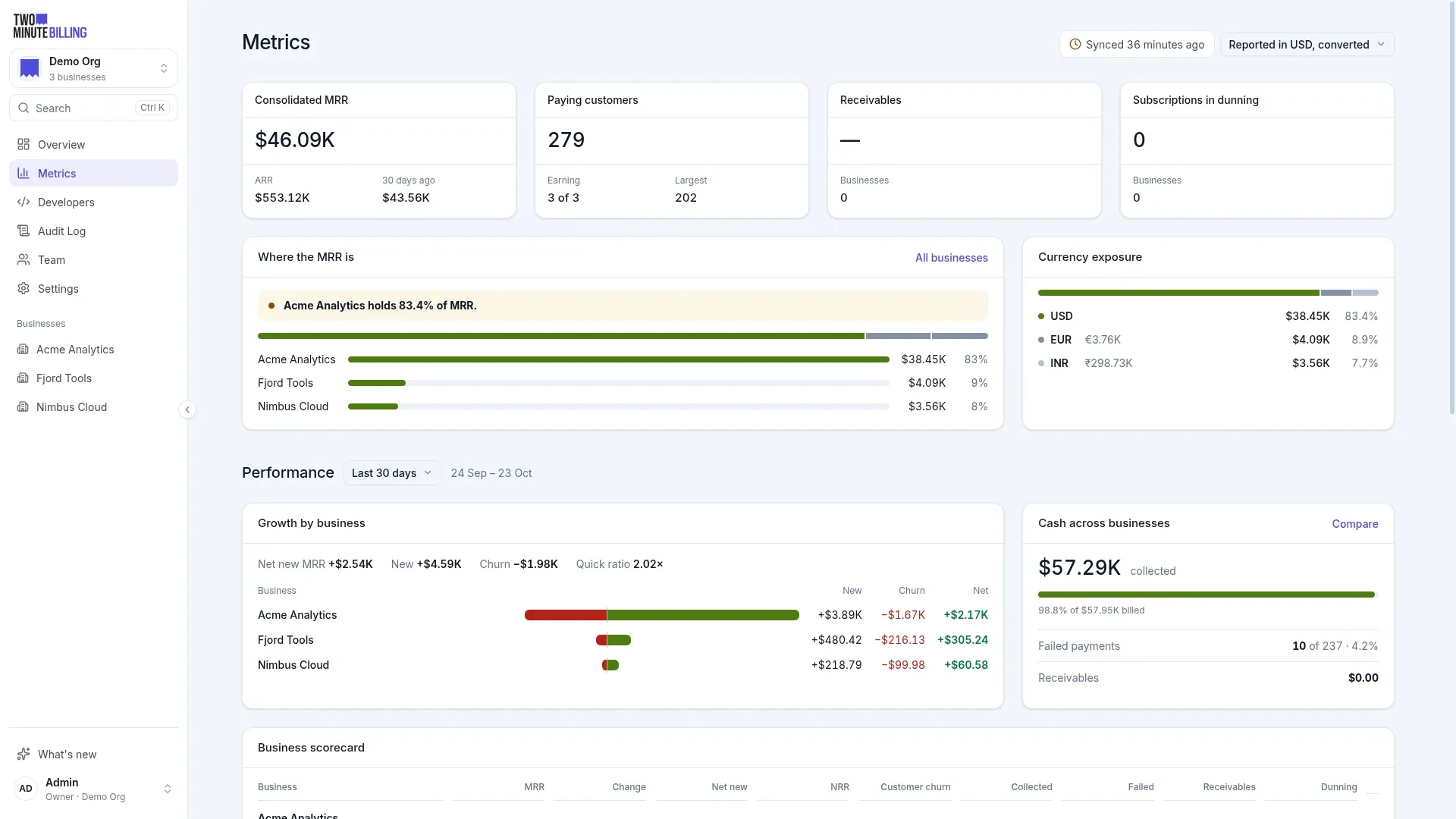
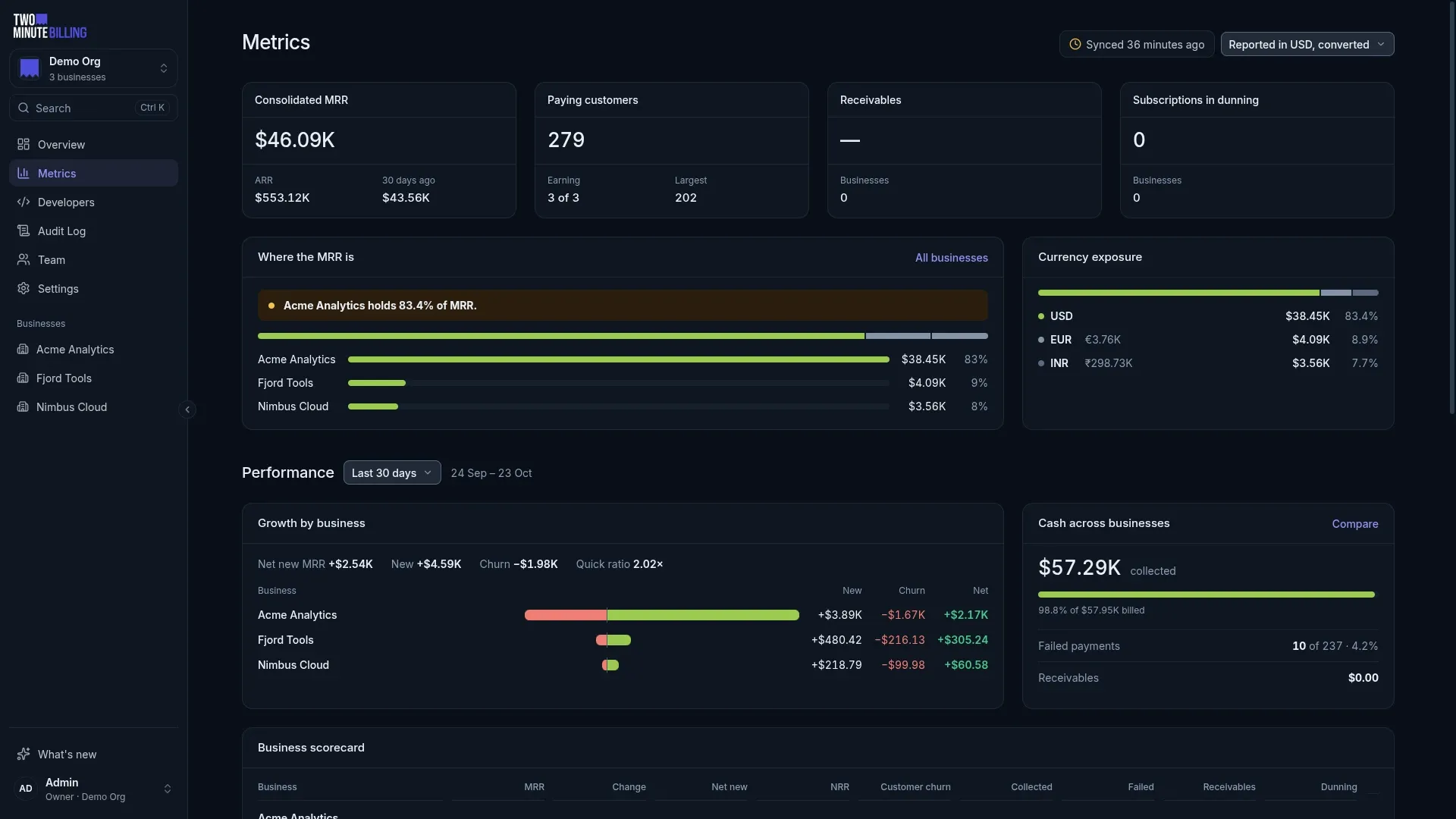
Every screen in the dashboard is also an API endpoint. Check plan limits from your app, record usage as it happens, and charge through the payment gateway each business already uses.
Pricing changes without a deploy, and one integration for every gateway
Plan limits live in billing
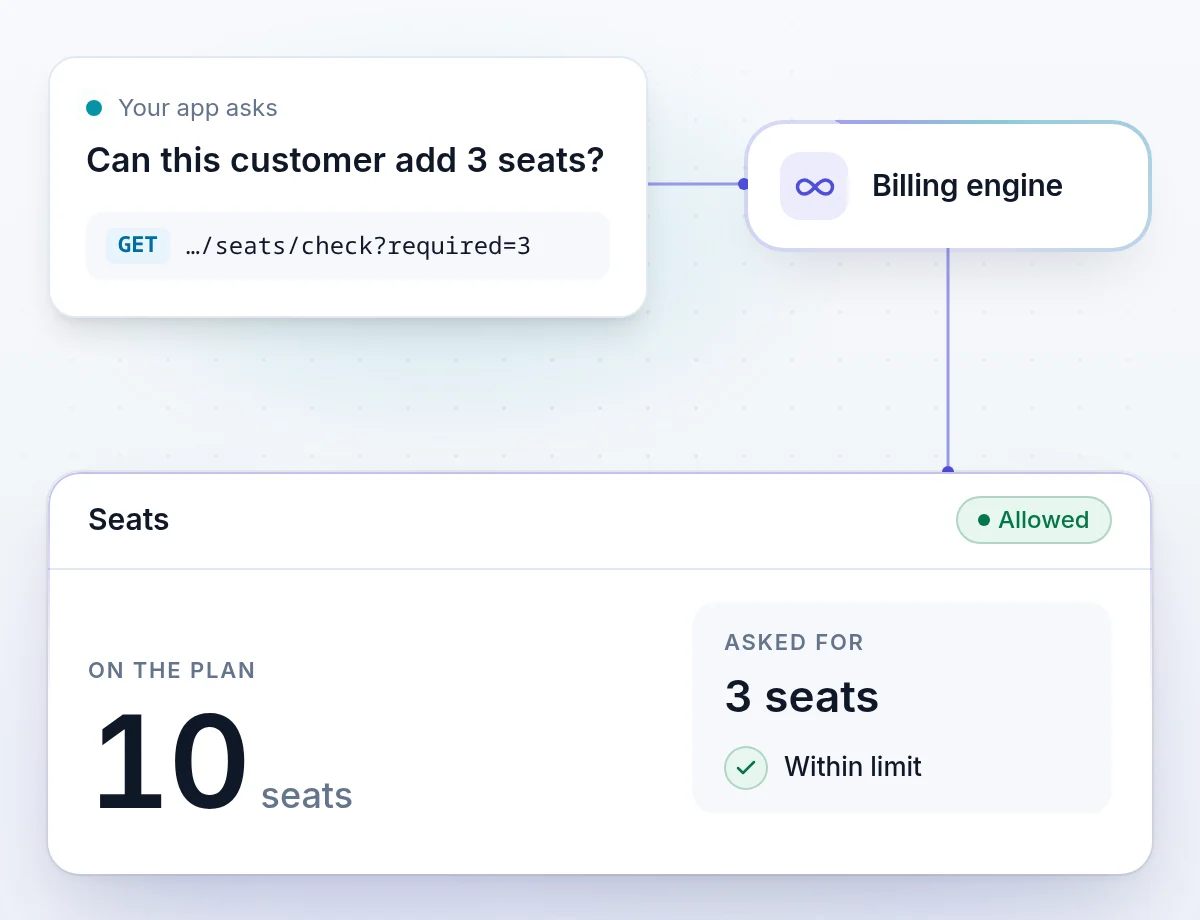
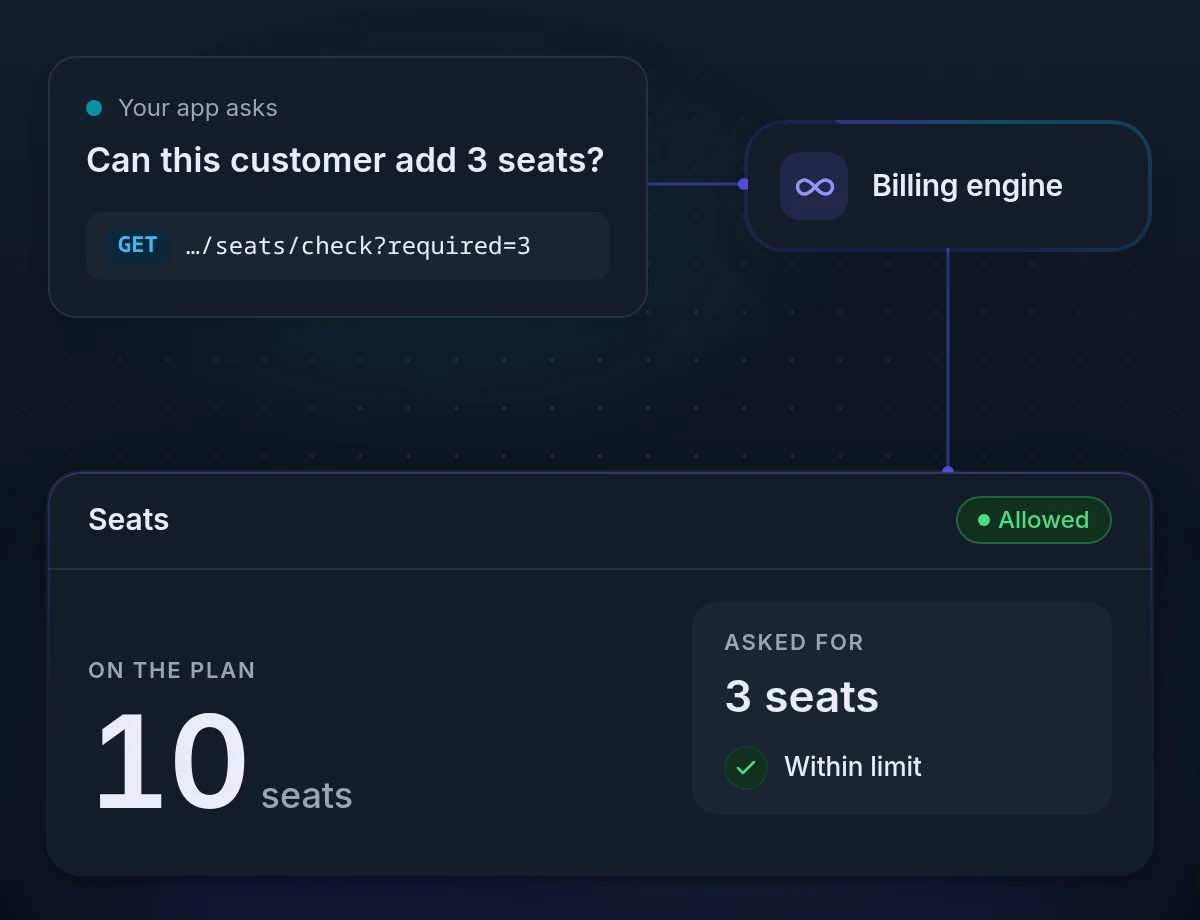
Change a plan's seats or quota in the dashboard. Your app reads the new limit at the next check. No release.
One integration, any gateway
Write the payment flow once. Each business selects its own gateway, and your code stays the same.
Your numbers, in your tools
MRR, churn and cohorts from the analytics API: the same figures the dashboard shows.
Feature access
Gate features and quotas from the plan
Define features once and grant them per plan. Your app asks one question: can this subscription use it, and how much?
- Switches, quotas and metersOn or off, a number of seats, or a metered amount.
- Granted by the planAn upgrade changes access the moment it applies.
- Overrides per subscriptionGive one customer 15 seats without a new plan.
- An answer with a reasonWithin the limit, over it, or not on the plan.
Payments
One integration for 12 payment gateways
Build checkout, renewals and refunds once. Which gateway charges the card is a setting on the business, not code in your app.
- The gateway is a settingAdd a gateway account; your code does not change.
- Money settles with youPayments go to the business's own gateway account.
- Routed by currencyEach charge goes to the account that takes its currency.
- Cards, wallets, bank debitsWhatever each gateway offers, on the same API.
Send usage as it happens. It bills at the period end
Record API calls, messages or storage from your app. The renewal invoice prices them with the plan fee.
- The timestamp decides the periodA record sent late still bills in the right month.
- Sum, peak, unique or lastCount API calls, peak seats or active users.
- Correct before it billsDelete a wrong record until an invoice carries it.
- Usage so far, on demandShow customers what they used this period.
Analytics
The dashboard's numbers, in your own tools
One endpoint answers every figure on the dashboard. Pull MRR, churn and cohorts into your warehouse or BI tool.
- One endpoint, every measureMRR, ARR, churn, retention and receivables.
- Per currencyDollars and euros are never added together.
- Cut by one dimensionBy plan, country, currency or business.
- Says how fresh it isEach answer carries when it was computed.
From a test business to live billing
- Step 1
Model plans and features
In test mode, in the dashboard or by API.
- Step 2
Connect your app
Check entitlements and send usage.
- Step 3
Add a gateway account
The one the business already uses.
- Step 4
Go live
Copy your catalog to live, with a preview of each change.
Money you can trace, cards you never hold
How we keep billing safeAn append-only ledger
Balances come from double-entry records. A correction is a new entry, so every figure traces back to the rows behind it.
PCI DSS SAQ-A scope
Card numbers go from the browser straight to your payment gateway. They never reach our servers or yours.
An audit log
Who changed what, from the dashboard or the API, with the values before and after.
Developer questions
Check your first entitlement in test mode
Create a plan with a feature, subscribe a test customer, and ask the API. No credit card required.