
Usage-based billing software
Usage-based billing for what customers use
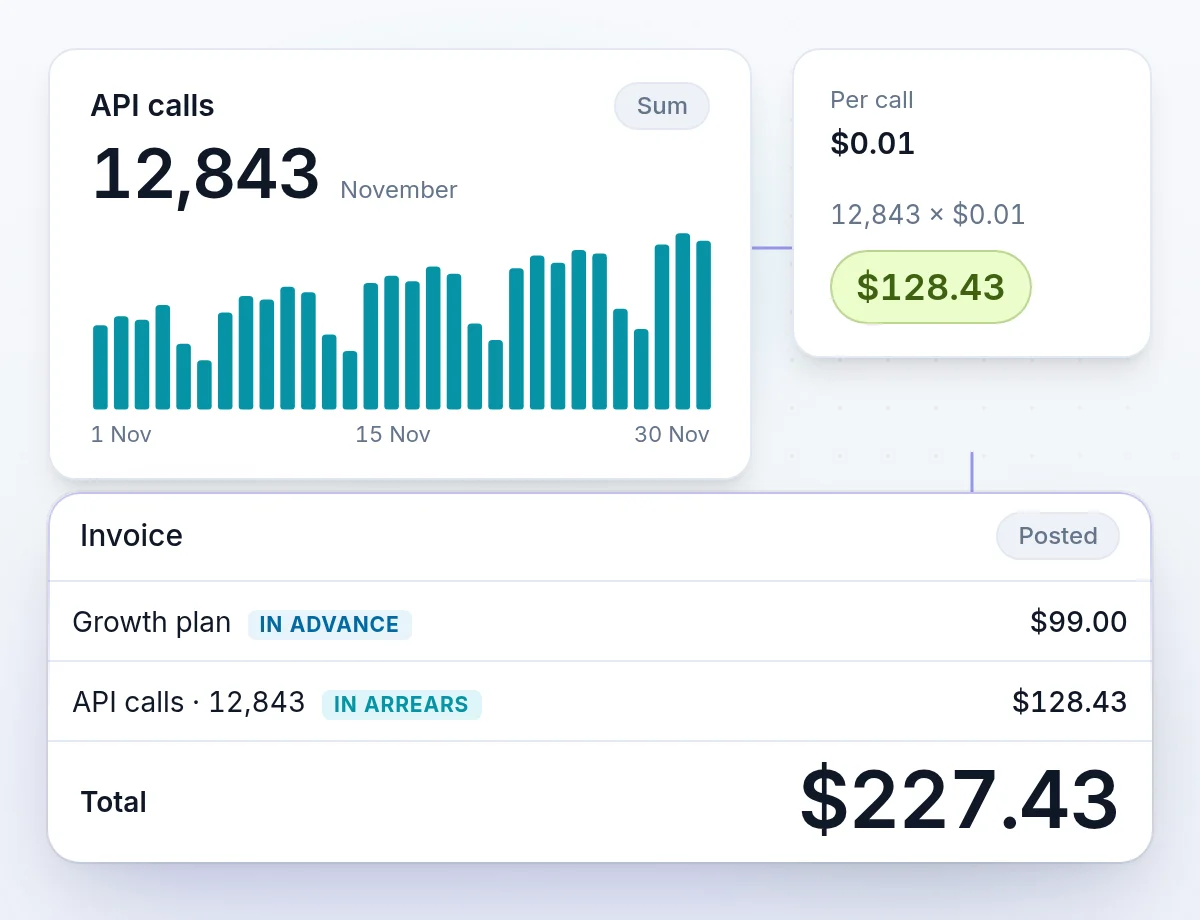
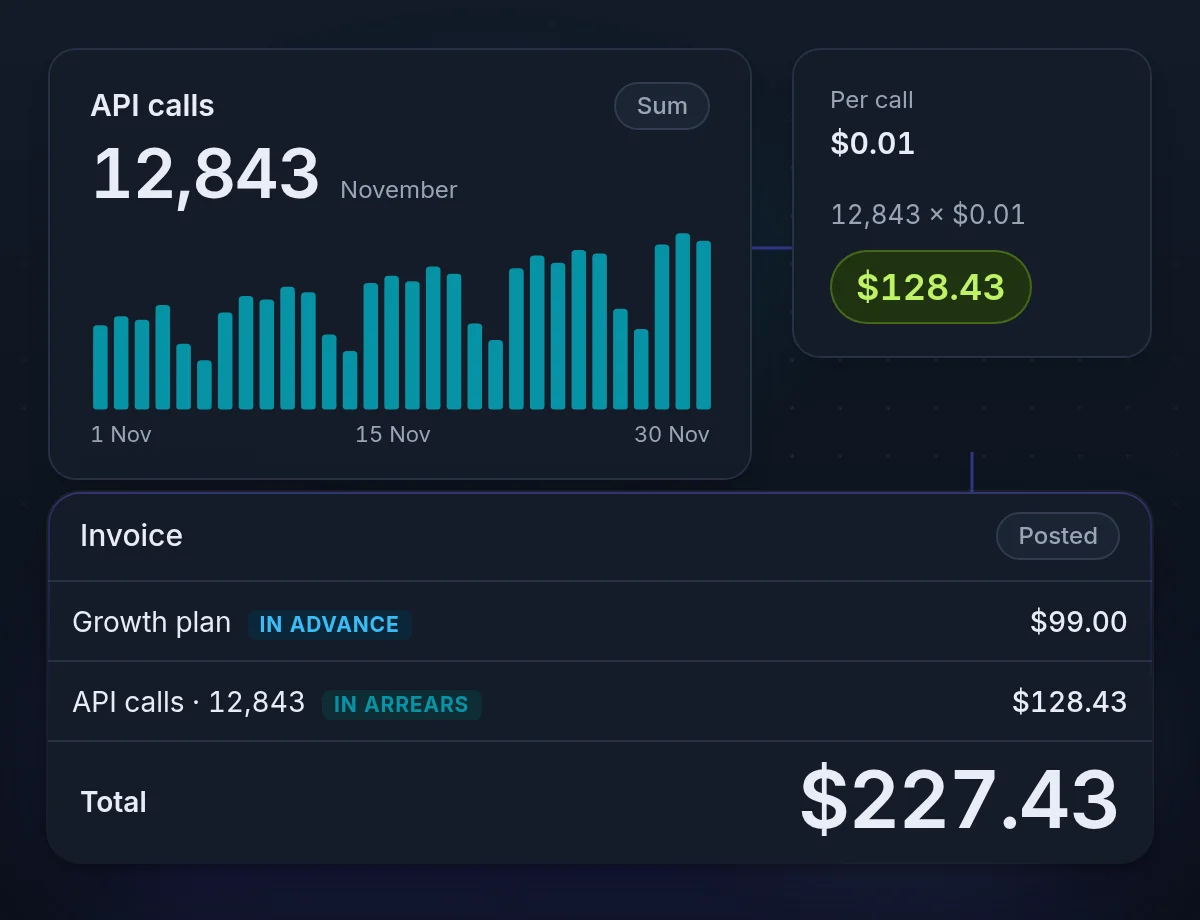
Usage-based billing charges for what a customer used in the period, such as API calls, storage, messages or AI tokens. Your app sends usage events. Meters count them, a rate card prices them, and the usage goes on the same invoice as the subscription fee.
Bill every unit, in the right period, at the right price
Sum, count, min, max, average, last, unique and time-weighted, so the quantity matches how you price.
Late usage is not lost
An event that arrives after its period closed bills on the next invoice, dated to its own period, at that period's price.
One invoice for fee and usage
Next month's plan fee and last month's usage on one document, not a subscription invoice and a usage invoice.
Meters and rate cards
Count usage the way you price it
A meter says which events to count and how. A rate card sets a price for each combination, such as each region or each model.
- A rate per combinationGroup by up to 5 properties. A default rate bills anything new.
- Sub-cent ratesRates to 12 decimal places, rounded once on each invoice line.
- Tiers and volumeThe rate can fall as the quantity grows. Free units come off first.
- Your own customer idsName the customer by a workspace or account id your app already has.
Periods and late data
The timestamp decides the period
Each event bills in the period of its own timestamp, to the exact end of the period. Upload yesterday's batch at midnight, and it bills against yesterday.
- Late events still billOn the next invoice, as their own line, at their own period's price.
- Correct before invoicingVoid an event until its invoice is finalized. After that, a credit note.
- Billed minutes after the periodUsage closes about 6 minutes after the period ends, then the renewal invoice bills it.
- Nothing droppedAn event for a customer or meter you add later is kept and billed then.
No surprises
Usage your customers see before the bill
The customer portal shows usage so far, by day, and the projected total for the period. You see the same on each customer, with cost and margin.
- Alerts and spend limitsWarn at a threshold, or stop usage at a limit.
- Invoice large usage earlyBill when unbilled usage reaches an amount, not at month end.
From an event to a paid invoice
- Step 1
You send events
As they happen, up to 500 in one request.
- Step 2
Meters count them
Per customer and per combination, all period.
- Step 3
The period closes
Usage for the period that ended, next to the fee for the one starting.
- Step 4
It is collected
Through your gateway, with discounts, tax and credit applied.
Money you can trace, cards you never hold
How we keep billing safeAn append-only ledger
Balances come from double-entry records. A correction is a new entry, so every figure traces back to the rows behind it.
PCI DSS SAQ-A scope
Card numbers go from the browser straight to your payment gateway. They never reach our servers or yours.
An audit log
Who changed what, from the dashboard or the API, with the values before and after.
Usage-based billing questions
Send your first usage event in test mode
Create a meter, price it, and see it on an invoice before you go live.